Chapter One - Soundtracking
There were important reasons we decided to sell ADA, in 1999, which I will detail later, and since then I’ve continued a direct, active involvement in the arts. Here are a few of the paths found that led me through listening and towards the music industry, soundtracked constantly.
I have a colour-wash-like memory of music in the house growing up in the late sixties and seventies. Voices like those of Stevie Wonder, Neil Diamond, ABBA, Glen Campbell, and the weekly dose of pastel fringed pop that was the staple of British TV, on shows such as Top of the Pops. In my early teens I would listen to Radio Luxembourg, late night BBC Radio One, and some of the other TV programmes that were starting to reflect other strands of music culture, those pastels starting to mix into louder, more vivid tones.
Years earlier I spent some time as a young ballroom dancer, at a time when it was definitely not fashionable. Music was obviously involved but I didn’t connect to it. Mostly because this diversion wasn’t part of my life with my mother. That music was stuck very much in the past, both creatively and in the personal situation around it. My mum had left my ‘father’ when I was about five years old, needing to find a less restrictive life for herself. He was much older than my mum, yet seemed to come from an even earlier era in terms of his approach to women and children. I’ve decided not to write too much about this part of our lives, for several reasons. It was my mum who had an influence on my life, and my connections to listening. There perhaps were conversation to have about that time that, simply, weren’t given the time and space they no doubt required. We lived for a while in my nana’s house, on Mayfield Street, Hull. I can’t remember for how long but I recall some details such as holding jumble sales on the pavement, selling comics and enhancing their appeal by sellotaping bouncy balls or toy water-spraying rings to their covers. Each week the ‘fizzy pop’ van would drive down the street and I’d be given the job of exchanging the empty bottles for full ones. Near the top of the street was a house whose door was always open to us children. This commune of women always seemed to have music drifting into the street, predominantly by female artists whose songs seemed to offer more than the light pop of evening TV. There was Joni Mitchell of course, but also folk and protest songs from others that are harder for me to draw out now.
For a year or so, aged ten, I was a chorister at Holy Trinity, Hull, further developing my early interest in listening to architecture and, by singing in Latin, which I didn’t understand, to language as a more-than-narrative element of music. I didn’t fit in. Back then most church choirs, especially in England, were all male, but I remember on a trip to Scotland, staying near Newton Stewart, we sang with some local, mixed choirs. Back at our camp I didn’t fit in again, the older boys discussing which of the girls they ‘fancied’, me thinking about how the female voices changed the ambience of the small churches, and how there were certain lines of harmony that seemed to charge the air as I listened.
Eventually we moved to the suburbs, but at home there was loudness from one source for a while. My mum though always found a way to create space for quietude, allowing me to begin understanding the power of shifting ones listening. Below my bedroom window, the clothes line was connected to the house wall. Sometimes at night, if I laid in bed as still as possible and listened until my ears adjusted, I could hear the slight drone as the wind resonated the line slightly.
For my generation 1977 was the year that music fractured beyond the major cities, and for a brief few months seemed to energise possibilities. At least it did for some of us. The first hints of New Wave had already started to catch my attention, to hint at something more than pop. To collide with my growing sense of not fitting in.
I was young, a little chubby and already uninterested in conventional ideas of male culture at the time. Partly because I’d already seen, close up, some of the negative effects, but I think it’s fair to say I just always found questions more interesting than conformity. This marked me out to the school bullies, who give me the nickname of Nancy (boy) shorthand at the time for anyone who wasn’t a ‘lad’. It didn’t matter that I wasn’t gay, to them if someone wasn’t blatantly acting out standard behaviours that was enough. I did wear skirts outside of school, never understanding why gender was applied to clothing, and doing the same at school was both an act of defiance and of solidarity with a growing number of protests around aspects of the school uniform code. At the time female students in the UK weren’t allowed to wear trousers in most schools, but ad-hoc protests were starting to happen. I joined one at the school I attended by wearing a school skirt, to highlight that there was no mention in the rules of any restrictions on what male students could wear. This might seem irrelevant to my connections to music, but for me it was all part of questioning, of not accepting the restrictions of mainstream culture. Of creativity as an act of personal, cultural and political freedom.
I was by this time saving up my pocket money for records rather than comics, first purchasing them from the record department of the store my mum worked in. The idea of making music myself now seemed possible. I could make sound, rather than needing to make songs that were constrained by their dependance on conventional ideas of musical skill. For my birthday one year, I think when I was twelve, my mum bought me a bass guitar, amplifier and portable cassette recorder. I can’t honestly say I fully understood the effort it would have taken my mum to afford those presents. I thought I did, but if I really had I would have done whatever I could to ensure I got less and my mum got to keep a bit more of her wages for herself.
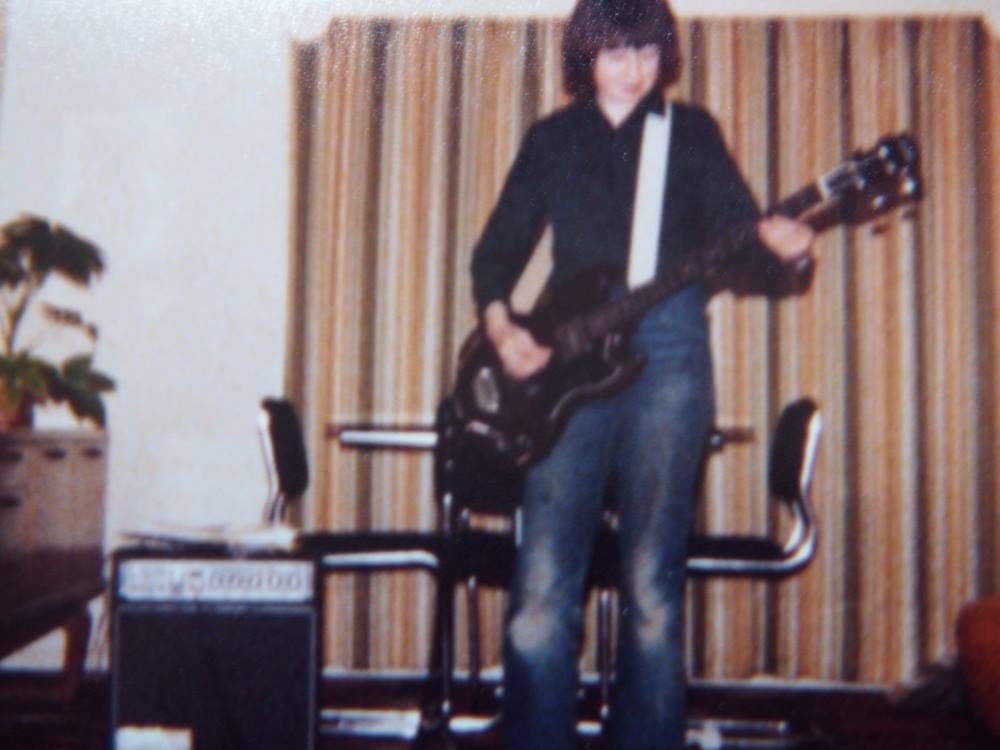
Within a year, I played my first gig, at a local church hall. The band had formed in the garage at our house, and by the time we were offered the support slot to another local band, we had three songs ready. However, we didn’t know anything about playing live, including writing a set list. We thought deciding the order the day before would work okay. On stage the songs sounded better than I was expecting. They seemed less wooden, though clearly not to the audiences taste. Coming off stage we discovered we’d been playing the songs in a different order to each other. Improvisation became a key aspect of my live performances from then on.
(coming off stage at that first gig)
The tape recorder was put to good use recording radio programmes and my early experiments with sound. Listening back in our garden one day, I pressed record instead of play. After a few minutes I realised but, importantly, I listened back to the recording of the garden. The sound was of course transformed not only be the hiss of the tape itself, but because the small built in microphone, like all ambient microphones, didn’t filter the sound in the same ways as we tend to do when listening passively using just our ears. I heard sounds on the recording that I hadn’t noticed at the time. Another step in my understanding of the possibilities of choosing to listen in different ways.
There were plenty of gigs locally, though I was too young to get into most of the venues. The first that I did get to see was Siouxsie and the Banshees, supported by The Cure, and with The Associates making an unannounced appearance. They got through their set without giving in to the jeers of some in the audience not willing to listen.
As the 1980’s began I was working with guitars, cassettes, keyboards / synths, zithers,, reel to reel recorders and various small instruments. My mum had, I have no doubt, again stretched her finances to buy me a Jen SX1000 synthesiser for another birthday, and I also bought a Casio keyboard, paying in weekly instalments, often also with help from my mum.
I released an album of feedback and tape works on cassette in 1980, though this was very diy, with the handful of copies duplicated on a dual tape deck at home. I’d used some surplus cassettes as the ‘blanks’, recording over the pre-existing classical music. One, for a reason I couldn’t work out, allowed that music to appear in the background, reversed (so I assume from the reverse side). Again, something I hadn’t tried to control led to a result that added to the process in a way that opened up other ideas.
Apart from the hours I spent at home making music, the other aspects of learning were more complicated for me. It took me a long time to understand that formal state education failed me, and many others who had a hunger for knowledge but who didn’t respond to being restrained by expectations of conformity and a curriculum that seemed designed to discourage creative enquiry. Tests for dyslexia, and many other neurodivergencies, weren’t available in schools back then, except for those who fitted into the prescribed idea of having the more extreme traits. Although I have still never taken a test I know that I struggle with the written word. I like reading and I enjoy writing, but it takes me a long time and repeated editing to find the various errors I seem to make with the simplest words or sentences. This leads to a nervousness about publishing texts, an extra bit of effort needed to think a paragraph or page is ready. I am sure this is another link to the pleasure I find in the music of languages I don’t understand, and indeed to sound in general. I did enjoy some lessons; English literature, music and drama, and I wanted to carry on with art classes when I moved from lower to upper school, but the rule was that you had to be able to draw a horse that looked like an actual horse to be allowed to do that, and that wasn’t the sort of art I was either good at or interested in. I know my mum would have done whatever it took for me to go to university if I’d wanted to, but by the age of sixteen I was done with the conventional education system and it seemed to be done with me. Whilst some found it easy to drift into art school as a counterpoint to not fitting in, for others university in the early 1980’s still seemed distant, inaccessible or too much part of the establishment. Art school, however difficult it is for some in the arts to accept, was still bordered for most. I wanted to get on with doing, though I wasn’t sure what exactly. I also wanted to contribute to the household, but it took me a while to even begin doing that.
The world of work began to open up, though never really with a clear plan of climbing some sort of ladder; After a couple of short YTS (Youth Training Scheme) jobs I started part time at Andy’s Records (Hull) before moving to Our Price Records, Harrogate, eventually becoming specialist buyer and department manager. I then got a job as head of UK sales for a distributor of traditional music in Starbeck (1). For a while I tried to deal with various issues at that company but left to establish, along with Julia and one other person, ADA Distribution, an ethical distributor of traditional and other specialist musics (2). During those years I also worked occasionally as a writer / contributor to articles for Music Week, Rock ’n’ Reel, Folk Roots, Gramophone and other publications.
Running the business meant there wasn’t as much time to spend on my own creative work, but I did continue to play live locally. These were improvised performances using guitar, field recordings, clear inputs, small objects and loops, often when asked to support artists who the local venues considered left-field.
For many years now my creative activities have been as a full time artist, musician / composer, curator, workshop leader, educator, microphone designer / builder, writer, publisher and as a very lucky collaborator with Pheobe riley Law, my daughter. Being her dad is a joy, and she has been a constant source of inspiration and strength.
1) I knew nothing of the various issues at this company when I started working there. I tried to change things for the better but eventually could not work for them any longer.
2) The term ethical distributor perhaps needs some explanation. The structure of the industry has changed of course but distribution is still an element, and often where ethics can get pushed further aside. At the time we set up ADA, distributors often made unreasonable demands on labels as they were often the only way to get releases into shops nationally and into other countries. It’s a rather simplified explanation of the complexities, but for those not familiar with this aspect of the music industry here is an example of how the chain of supply was structured before we set up ADA;
. labels would sign artists, record and press the releases. Artists would usually get a very small amount for their involvement, or, if they self-released, would do so to sell at concerts and perhaps through local shops. Labels factored in the cost of distribution when agreeing contracts with artists, often in ways that were opaque. It was hard for small or artist owned labels to get distribution, for reasons including that pressing small quantities of a release meant the artists couldn’t afford to sell to a distributor at the price they usually demanded. Certain genres of Independent music had main distributors such as Rough Trade and The Cartel, but most other forms of specialist music could only access distribution in a rather ad-hoc and fragmented way, if at all.
. a label would deal directly with a distributor or, with one more stage in the chain, a wholesaler who would then deal with various distributors. This meant labels / artists getting an even smaller return, but it was seen as a way to have access to distribution without negotiating with individual companies. This was, in part, because distributors tended to have an often rather unapproachable process. For a small label it often seemed easier to sell for a pound or so less to a wholesaler and, technically, have their titles available to several distributors than to sign restrictive and lengthy exclusive contracts with one company.
. a distributor would handle a labels / artists releases, marketing new releases to the trade and handling regular stock orders from shops. By the time CD’s became the main format the price structure in the industry, in terms of specialist musics, was, generally, that labels would have to sell to a distributor at around £4 per disc or less. Distributors would push for the lowest price, free stock and other deals. The distributor would then sell to independent shops at a full trade price of around £7.29 but lower to chains, often at around £6.40 per disc, as the chains demanded lower prices, even when they sold fewer copies than some of the independent stores that specialised in different genres. Distributors often saw the chains as a way to maximise calls on labels to lower costs to them and supply more free stock. Stores would then sell CD’s for between £9.99 & £12.99, and much more for imports.
What we did at ADA was to set about changing that established system. We didn’t pressure labels to sign exclusive deals or give us bigger discounts, and we raised the price we paid them, whilst also ensuring artist-released albums had national and international distribution. On average we paid between £5-£6 per disc, establishing a way of working that meant our profits were not dictated by lowering the cost at which we could acquire stock, but taking a creative, progressive approach to raising the profile and sales potential of the releases themselves. That sounds obvious, and indeed it should have been how the industry worked, but outside of a few reasonably decent specialist distributors it wasn’t always the norm. In reality marketing was built around a system similar to the ‘old school tie’ approach, and on the ‘sell large early’ system by which success was then, and often still is now, measured. Working with outlets to understand the specifics of their location and customer base, and having a more collaborative connection, was rare.
We stood firm with the chains (Our Price, Virgin Records, HMV, Andy’s Records, Tower etc) and made the argument that they had a duty to support smaller labels, and the music they released, by paying a fair price. In addition we changed the way artists were paid at festivals, and, on occasion, with releases that helped particular artists or causes, we waived our part of any sales. We also tried to source recycled packaging and support projects to tackle biases within genres and the industry more widely. We weren’t alone in doing that of course, but it was rare for a distributor. Such efforts helped change the industry, but it is somewhat telling that the ethical stance that we, and a few others, took has still rarely been replicated in the industry. For example the percentage we paid to labels and musicians in the 1990’s remains higher than specialist distributors pay currently. There are people who call themselves distributors, demanding cd’s at £4 or lower and who actually trade, almost entirely, as a retail business via mail order. That is retail not distribution, and is accepted simply because there are so few examples of a more ethical way of working that artists / labels often don’t feel able to question the system. It is still about power and how some people decide to use it. Likewise, as I write this we are twenty-five years on from when we sold ADA and I still see labels, end of year ‘best of’ lists and various online projects that have a significant, sometimes total, bias towards male artists. I admit that I have no idea how that is still happening, and how it seems to have become normalised again.
Chapter 7 - Loss, stepping back, then forward in wonder
The writing in this chapter doesn’t convey even a fraction of the emotions involved. To be honest there is so much here that I think I still haven’t fully come to terms with.
As I’ve already mentioned Julia and myself worked hard and perhaps didn’t spend enough time focusing on each other. In fact it’s more accurate to say that it was me that didn’t spend enough time focusing on Julia. I am perhaps being harsh on myself, but I think she got the balance right more than I did at times. I became exhausted, yet with the need to keep working long hours every day. I began to find that rather than feeling motivated by the drive to improve things for the labels, artists and the music itself, I would find myself more desperate to get back to the flat earlier in the day. To be with my mum, simply talking and starting to have those conversations that develop naturally as we mature. To get back to Julia, eat together and think about the next steps in our life together.
We were at a point where running an international business, distributing hundreds of labels in the days when computers were far from what they are now in terms of stock, database and accounting management, we perhaps needed to adjust aspects of the structure of the business. Things reached a breaking point. Either we expanded to become a larger business, taking substantial business loans and trying to avoid becoming distanced from our sense of ethics, or we stepped back. We were probably edging towards that decision but events overtook us. I can’t in all honesty piece together my emotions back then but clearly I was starting to lose my way. We decided to take a break from our personal relationship. It took me some years, but I came to realise that there was always some part of me that didn’t quite believe I deserved Julia’s love. Instead of facing that and finding out where it came from, my exhausted self found it easier to simply believe I wasn’t able to make her happy. The next year or so is, of course, private so I won’t go into it here, as it’s not only my story to tell. We both met other people, so I will say however that this is when my wonderful daughter Pheobe came into my life. She gave me, still gives me so much, and it was the grounding affect of having her in my life that helped me in so many ways at that time, which will become clear as you read on.
Whilst on holiday in France I woke up one day unable to fully piece together certain aspects of my life. The exhaustion had taken over. On returning home, my mum and Julia took care of me and slowly I began to focus, and, in part at least, repay them all for their care for me. Julia and I did come back together in some ways but I had left her when she was, unbeknownst to me, still waiting for ‘us’ to return and I couldn’t put that right.
Then something happened that I couldn’t control, no matter how much I wanted to. My mum, my amazing, wonderful, supportive mum found a lump and within weeks was having surgery and treatment. I can’t write about these months in any detail. I should instead leave several pages clear of words, to speak for the love, the strength, the tears and all the holding and being held.
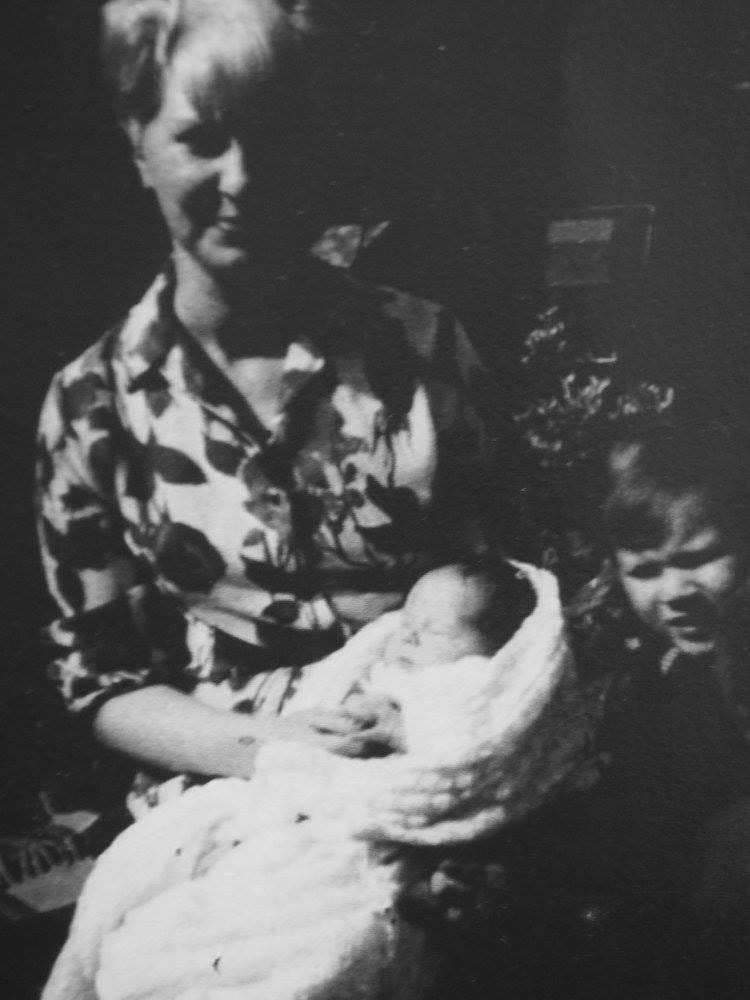
(my mum with me in her arms)
My mum passed away a few months after Pheobe’s first birthday. At the service I held Pheobe in my arms, with Julia by my side. After the service I noticed Carol had been there, at the back of the church. Carol and I had met when we were both seventeen, the first relationship for both of us, and she and my mum had been close during those years. As she gave me a hug I tried to thank her for coming to the service, the words breaking as I spoke.
How many pages have been written about grief? and how futile they all are when it arrives into ones life. Time does not heal, it merely shifts the grief around, enables you to manage it in different ways. But, it’s still there. I had Pheobe to be with, to look after and I took, still take, great comfort from knowing her. As ever a women in my life is giving me so much.
We, myself and Julia, knew that we couldn’t carry on with the business. There had been too much loss, and we were both tired. Julia needed to put some distance between herself and the man she had loved, and who had left when he should have been taking time to find his way back to her. I don’t think I knew what I needed, or indeed that what I needed was even on my mind. I was lost, except for when I was with Pheobe and could see an entire new world forming in her face. ADA was still needed in the industry so we started conversations with two interested parties about selling the business. I can’t actually remember how that process began. It is so odd to realise that. I haven’t thought about it for some years, but to find important sections somehow lost in my memory is puzzling. Of the two interested parties one was a larger distributor that we knew quite well, and the other, we thought, were friends, though perhaps friends is overstating things. We knew them and were friendly with them and they with us. The larger company, had we pursued discussions, would have put together a formal offer that took into account the stock, the mailing lists, which at the time were the largest for specialist musics in Europe, and the good will in terms of trade contacts. The other party offered less. A fraction of the value that barely covered the stock, let alone anything else. Looking back I can try to say we did the right thing in selling to them but we didn’t. I don’t think the other company would have been a good idea either, as we’d have always felt that we had passed ADA to a company with less focus on maintaining the range of music we handled by then, but selling to who we did was a mistake on several levels. We spent several weeks arranging for the transfer of trade accounts, supply contracts, retail connections and distribution agreements with various labels, as well as stock taking and setting up various software systems for the people who would be taking over the business we had worked so hard to build. As part of the contract we also included spending some time with them, at their premises after they had taken over, taking them through the various ordering systems and helping them learn the ropes so to speak. Despite doing that for the agreed length of time and beyond, they began to demand more. It became clear that they seriously underestimated the skills needed to run the business and whilst we both tried to help as much as we could, a point came where their attitude became unacceptable. I was, at that point, deeply affected by grief and trying to spend as much time as possible with Pheobe. Eventually they refused to pay the second instalment of the purchase price and we were forced to start legal action. There might be some people reading this who heard one side of the story and as I try to detail ours it is simply to counter their misrepresentation of the situation. There came a point where we were being put in an almost impossible situation, and it was affecting us both. At the hearing they were ordered to pay the amount owed, after being told by the magistrate that we had gone far beyond the requirements of the contract of sale. What hurt was that we had sold to them at less than the business was worth, believing that the ethical values would at least be intact. We said nothing to anyone else about the situation, whilst they misrepresented it. I could have fought against that, put the facts forward, but I was, as I said, exhausted and I found myself realising (long overdue perhaps) that some people are ready to believe whatever they are told even if it goes against everything that is already known about you. I have never understood that. I still don’t. Over the next few months they undid much of the work we had done on getting a wider range of music into the UK and eventually, so I’m told, they only handled a small number of titles from certain labels and mostly for mail order rather than full distribution. They then sold the business on and, as far as I know, it was eventually closed down as a distributor. So, I stepped back, moved to the home I had grown up in, spent my time with Pheobe, and finding a way back to my earlier connections to music and sound. Julia eventually also moved away, to work for an organisation combining traditional music and education. Thinking about a photograph on social media, via a mutual contact, that popped up whilst I have been writing this, from a few years ago I think, Julia is smiling. A smile that is hard to describe but hers alone. I hope she has smiled more every day since we parted than she ever did when we were together, and we did smile a lot through those years. It took me a few years before I could work with any focused energy again. Whilst running ADA I didn’t have as much time to spend on my own creative work. I did perform live often though, mostly in Hull, supporting left-field artists. Those sets involved guitar, tape, field recordings, zithers, clear input and small objects. Gradually I began playing music again, locally and touring the Netherlands before my work shifted towards gallery settings, durational performance and extended listening practices. I’m known now to an entirely different audience / community for my focus on the act and art of listening, both as an artist and a curator, workshop leader, educator and microphone builder. The aspect of community has remained important, bringing with it the same positives, and the same disappointments when my naivety bumps up against individuals or systems that have problematic behaviours or biases. The experimental music scene has evolved to include links with traditional music, with younger artists drawing on revival albums as source material and inspiration. Occasionally I have worked with artists whose work I distributed via ADA but I’ve very rarely mentioned that. I’m not sure why. I’m extremely fortunate because not only does Pheobe bring me so much joy as her father, but we also work together, both on building the microphones that have become widely used across sound culture, but also in installations and performances. We’ve visited many countries as artists, including getting to spend time in Japan, a country whose culture I have been fascinated by since my early teens.
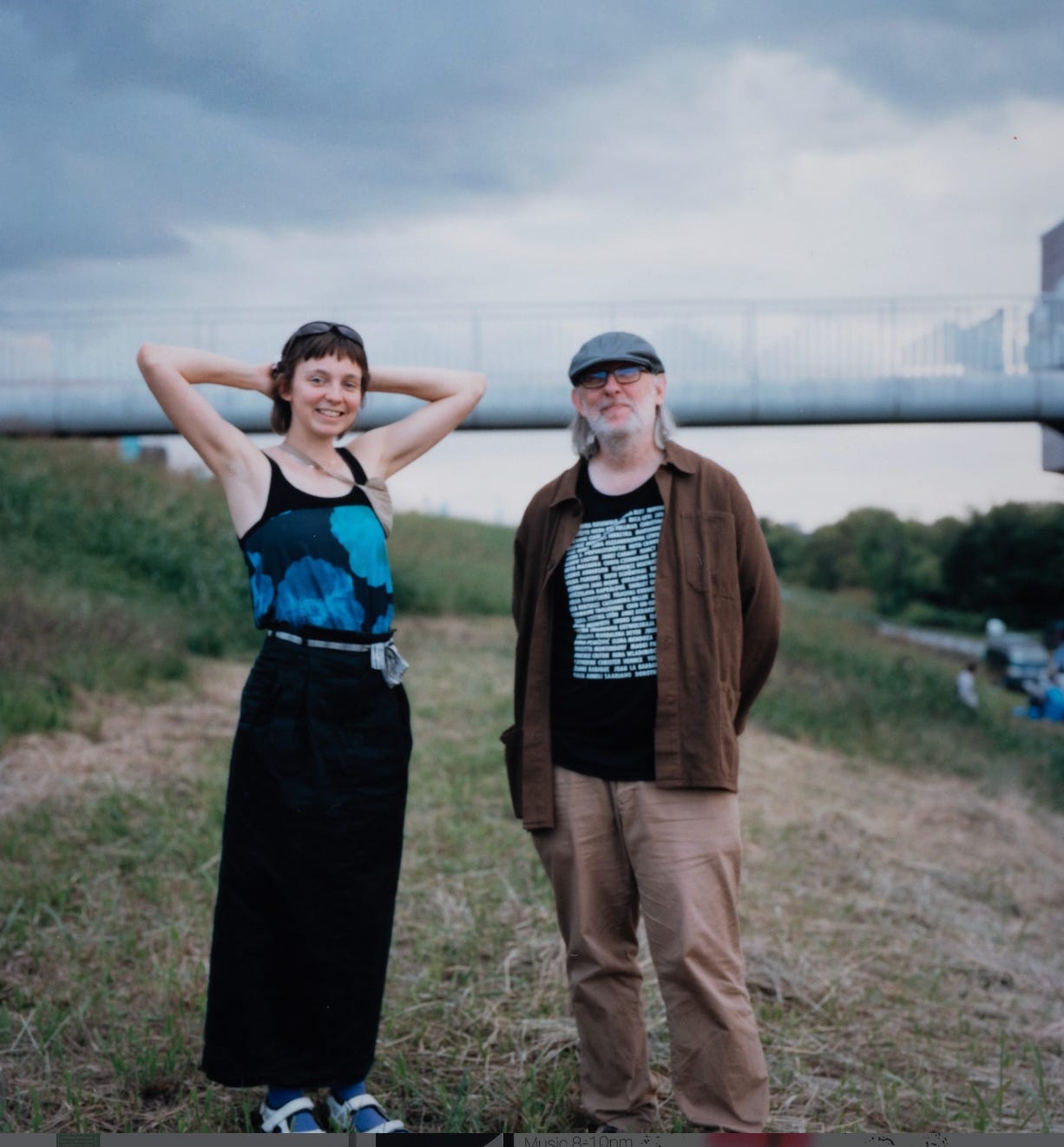
(Pheobe and me in Japan in 2023. Photo by Hajime Kato)
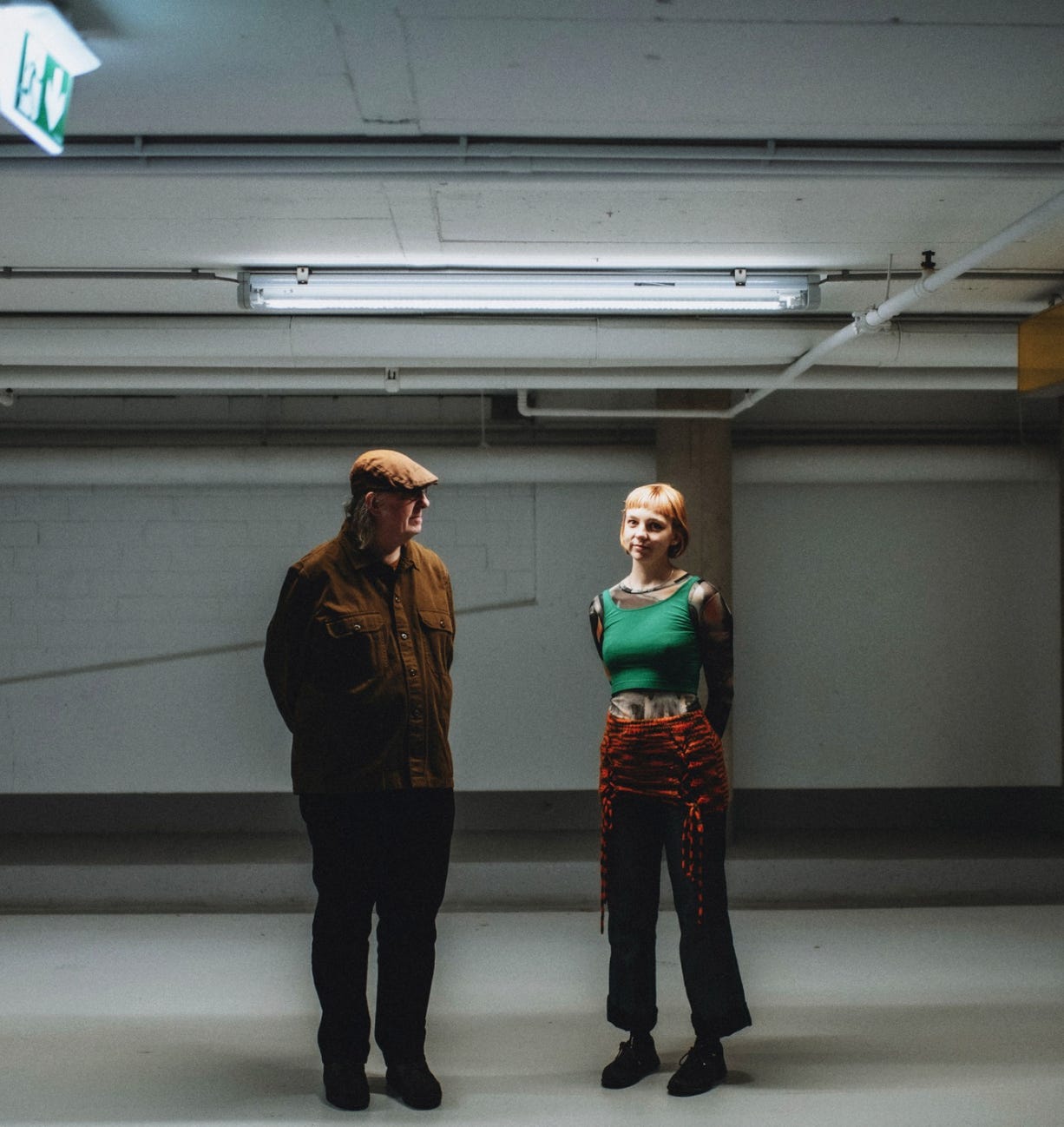
(programme photo for Rainy Days Festival, Luxembourg 2025. Photo by Véronique Kolber)
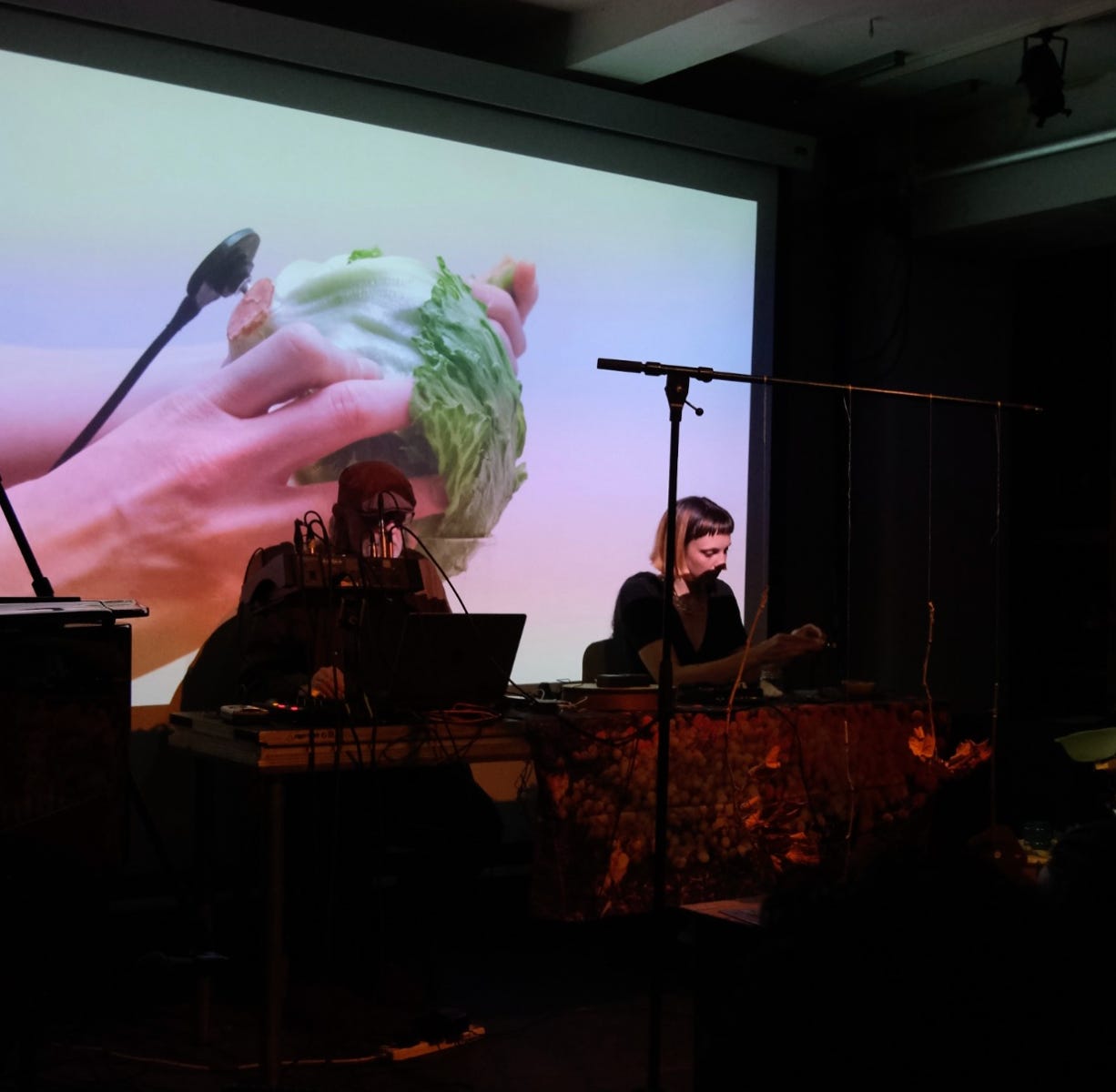
(performing with Pheobe at Cafe Oto 2025)
The DIY music culture that arrived with New Wave, coupled with the years working in the industry, noticing the positives and the negatives, has all had an effect on my own creative output. Whilst I have released work via established labels mostly I have published it on my own imprint, which did at one point also release work by other artists, including Catherine Kontz, Catherine Lamb, Julia Holter and others. Part of the reason is that I like all the creative aspects, from the freedom to make whatever work I intuitively want or need to, to taking and choosing the images for the artwork. Naming the tracks and the albums, and the often private thinking through all the processes. All of those things can be possible when working with labels but I tend to work most days from early in the morning to late at night and there’s something in my personality that needs to keep hold of space, even if I’m quite bad at taking it for myself. I’ve always enjoyed writing fiction but I’m as nervous of the publishing industry as I am of the music business. I never wanted to be one of those people that took being ‘a musician’ or an ‘artist’ as some kind of uniform, nor would I fit in with being a ‘writer’, or rather I’m simply not so interested in being defined by such categories, as they tend to come along with all manner of expectations. I think this also is a part of me that I am still trying to understand. Sometimes I find it difficult and at others I am grateful for all the sensitivity my mum gave me, because it allows me to, hopefully, give to others, but also to allow some tenderness towards my self when needed.
I don’t know if I’ll publish the fiction I write. I shy away from the processes involved in finding an agent and publisher. I am bruised by having worked with an art form I cared about and I think that is part of my nervousness. I’m also aware of how such distant experiences such as my time at school, and how the arts deals with issues around class all effect me in ways I was sure I wouldn’t allow them to. I still tell myself I don’t, but something holds me back. Of course that could also be my inner self knowing that the work still isn’t ready. I don’t know, but right now I am enjoying the writing itself and that is important.
I’m still working though experiences. Still trying to allow myself some of that space.
my mum’s garden, sometime in the 1990’s)
Legacy
Neither Julia or myself were comfortable with the self promotion aspect of the music industry, so it’s not surprising that the history and legacy of ADA isn’t as well known to anyone who wasn’t around at the time, but I am proud of what we achieved, and how it had an impact on both the industry and various areas of music culture. There were others working hard for change also of course and, as I alluded to earlier, it is telling that there is very little detail in the histories about any of them. I can’t claim to have read every book, article or paper on the workings of the music industry of course but personally I don’t know of any that deal with the work of specialist distribution or view the industry as a series of connected services, each with its own specific challenges.
As such, I have to try to re-cap some of the impacts we had whilst recognising that distribution was, and still is, behind the scenes. Less visible than the artists and labels, but essential, and highly important in the changes that were, and still are, needed in the industry.
. We worked with thousands of artists and labels that were releasing traditional music, jazz, experimental music, contemporary classical, blues, songwriting, helping them gain more income from their work and build larger audiences by getting their releases into stores around the UK, the rest of Europe, Japan, on more radio stations and in to the hands of customers globally.
. We expanded the availability of and interest in the music of various cultures in the UK, and in efforts for that to be ethically guided.
. We provided or supported the initial impetus to various areas of creative work that went on to become influential, and to change music culture more widely.
. We played an active part in attempts to combat the sexism that was rife throughout the industry, and also instigated policies and discussions around other forms of bias and prejudice.
. We changed how distributors were expected to deal with labels releasing specialist music, and how the pricing points across all stages were calculated (this however has been rolled back, with most distributors now paying less to labels / artists than we did in the 90’s, even whilst selling at similar or higher prices)
. We helped establish various labels, collectives, and creative projects to champion or explore music as a global force for change (political and social). We did this through distribution support, connections and advice on the market and production processes.
. We stocked most public libraries and university music departments in the UK, attempting to change the frankly bizarre purchasing systems at the time, which required suppliers to charge public institutions over and above retail price. Prior to our involvement because of this system various institutions and libraries were often unable to carry titles on smaller labels, as doing so meant expensive and slow importation. The impact of this one small area of our work was to change access to academic research materials at the time, though digital has, of course, expanded things even further since (or should have).
. and, perhaps most importantly, dealt fairly with labels, artists and our customers.
Apart from a general thank you to all the labels and artists who trusted us and allowed us to work with and for them I have to say thank you Julia. You gave me much in those years, much that stays with me even now, still sat on the blue settee, though it’s getting old, as am I.
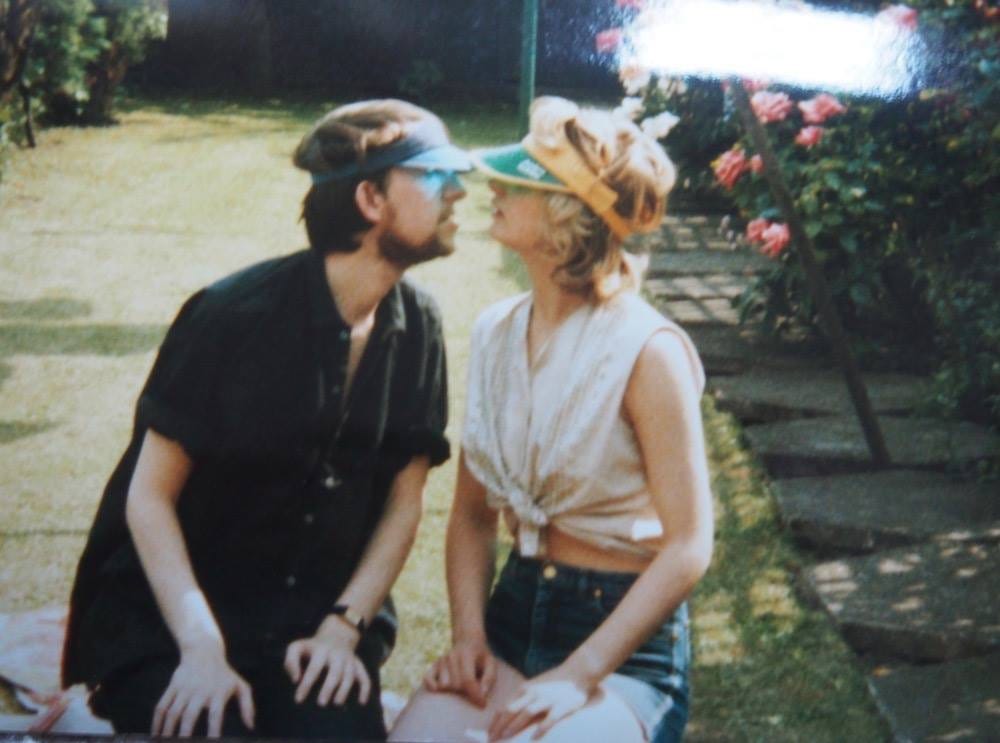
(me and Julia in my mum’s garden, sometim
e in the 1990’s)